


























Ameh, SDGS Short Film and Awards Winner, Spotlights Girl Child Rights in Award-Winning "Scar"

ABUJA, Nigeria
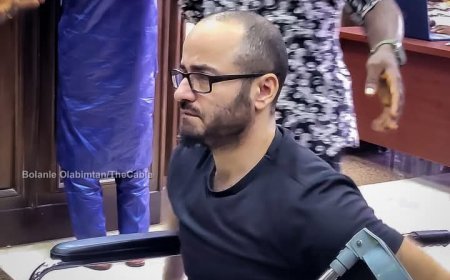
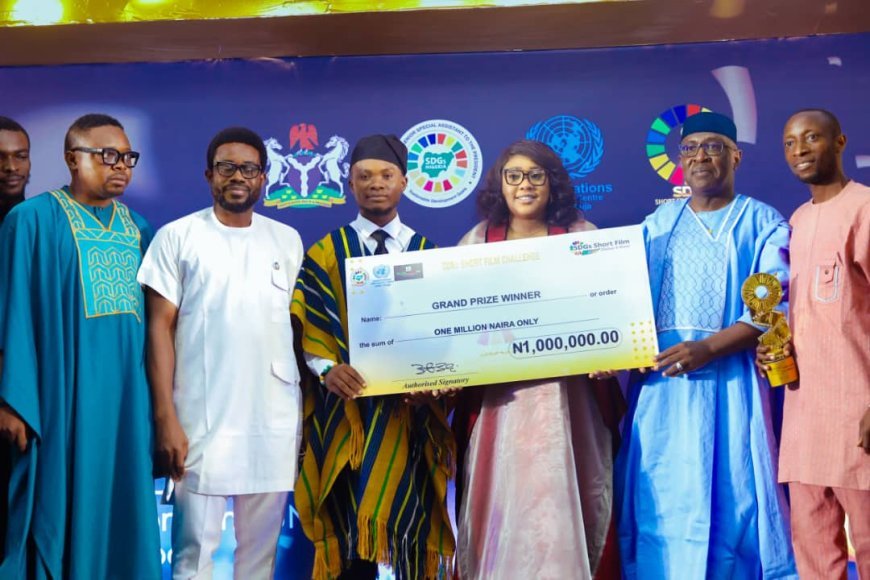
The 2025 first prize winner of the prestigious SDGs Short Film Challenge and Awards, William Ameh, said he is grateful to the SDGs for providing the platform for him to use his weapon-story telling-to address critical development issues facing young women.
Ameh, who describes himself as a "full-blooded, film person" is from Nasarawa State with a background in quantity surveying from the Federal Polytechnic of Nasarawa. He has built for himself, an impressive career telling authentic African stories, one of which is his winning film, "Scar," and advocacy and call-to-action action against the deeply troubling issues of early child marriage, forced marriage, and their devastating impacts on girls in Nigeria.
The SDGs Short Film Challenge is coordinated by the Office Office of the Senior Special Assistant to the Nigerian President on SDGs, in collaboration with the UN Information Centre (Nigeria), and FreshNews multimedia, to mobilize young filmmakers to accelerate the Sustainable Development Goals.
Ameh's filmmaking journey began with his dream of becoming an actor. However, his path led him to Tucker McFarland, a renowned Nigerian filmmaker, under whom he was an intern.
Under McFarland's mentorship at Evolution Studio 66, Kaduna, he honed his craft across multiple disciplines-screenwriting, cinematography, lighting design, and sound design, while also working in various capacities on film sets, including serving as production assistant, gaffer, and runner, all of which provided him with comprehensive knowledge of the filmmaking process.
"I did numerous auditions, and I then quickly realized that acting was not my thing. I was a better storyteller than an actor," Ame explained shortly after being crowned.
In 2022, he co-founded Regent Film Studio with some of his friends, focusing exclusively on Afrocentric stories that address societal issues, particularly those affecting African communities. Ame, who described his award-winning presentation as a scary reality that really touched his heart, emphasized its urgency:
"The film, Scar, like I used to say and I'll keep saying, is beyond a story. It's a crime. I'm just a storyteller to elevate, to echo this crime."
He explained that the film is a call to action and an advocacy for the protection of the girl child from harmful practices, including early marriage and forced marriage, noting that the violations create generational trauma.
"These children today that are girls, grow up to become mothers, grow up to become broken mothers," Ame said.
"And these broken mothers give birth to a generation of broken people," he added.
Asked how he, a male decided to make abuses against the girl child his central focus even where his female competitors' presentation chose other issues, the young film maker, in a thoughtful response noted;
"I am a man. But my mother is a woman. And we see their pains. We see their struggles. And we cannot be men if we don't have better mothers.
"If you train a male child, you just train a man. Right? But if you groom a woman, bring her to, train a woman, give her all the opportunities-you don't just train one person, you train a generation of people."
The UN Resident Coordinator in Nigeria, Amb Mohammed Malick Fall, had earlier emphasized that "storytelling is a powerful advocacy tool," noting that film can inspire, provoke empathy, and mobilize communities toward accelerating SDG achievement. Ame echoed the same sentiment when he said:
"There is no better tool to tell stories. There is no better tool for advocacy than storytelling. Storytelling, for years, has been a tool through which identities, through which realities have formed and shaped," adding that African storytellers need to focus on narratives that matter.
"Right now, in Africa, there's greater urgency to tell original, indigenous stories. Because there are so many things that have been situated that is constituting so much societal damage to us, and we need to address the issue."
Ame says his vision extends far beyond entertainment as, according to him, African filmmakers must reclaim their narrative mandate to tell African stories:
"The African story has not been written by the African people. We are consuming and living the reality of other people's narrative. So, we need to tell the African story as we see it. Because it is our reality."
From the humble 73 entries that heralded the SDGs Short Film Challenge and Awards in 2023, to its current figure of over 2,250, there are indications that the event is steadily rising in terms of growing engagement.
As Africa approaches the 2030 deadline for achieving the Sustainable Development Goals, SDGs, there is hardly any doubt that the (agenda-setting, call-to-action) event will become the platform with which filmmakers like William Ame will prove that cinema is not just entertainment, but also a powerful catalyst for social change and a tool for building a more equitable future, the focus of SDGs 10.
The SDGs Short Film Challenge and Awards is designed to address themes from the 17 United Nations Sustainable Development Goals. The winning film receive monetary prizes, global exposure, and additional opportunities for professional development.
What's Your Reaction?