





























The Problem With Us
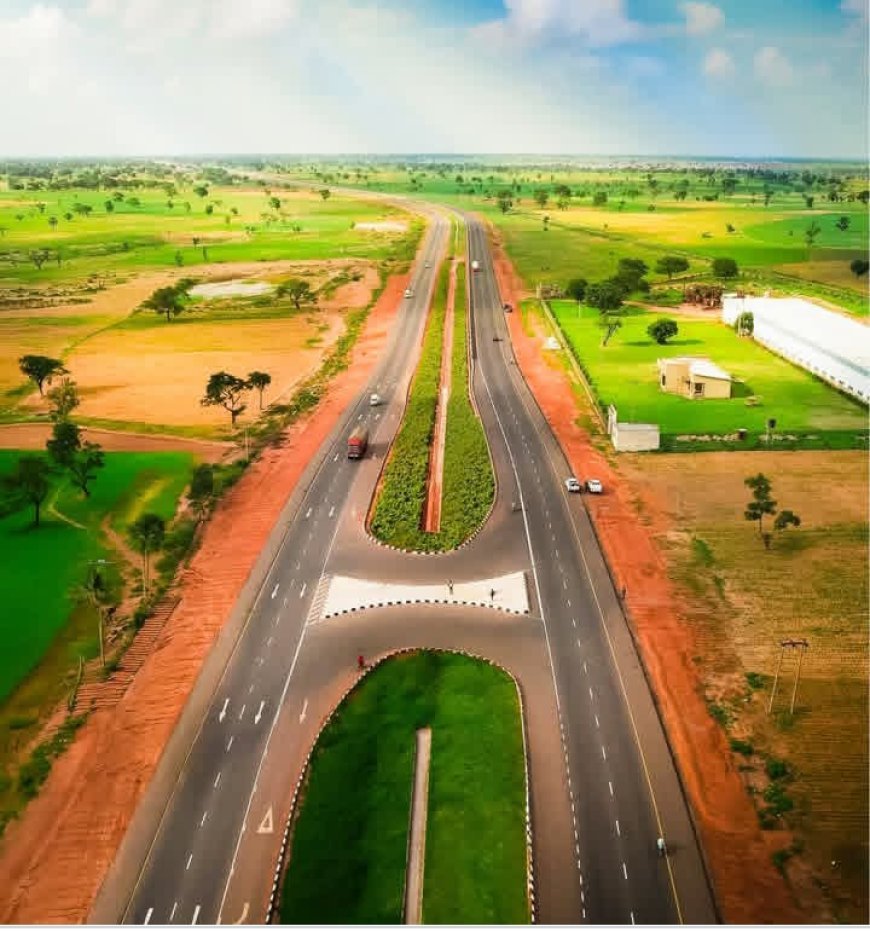
Travelling via a land trip through any part of Northern Nigeria as this writer did recently is always revealing. Truly, it unveils certain facts about us as Nigerians-facts those from the southern divide seem to overlook, facts that seem to represent an important sad reality of today's southern Nigeria. The experience will leave any Southern Nigerian in no doubt that there is an urgent need for the South to retrace its step from certain ill-informed beliefs. We need to remind ourselves that we cannot continue to cry wolf over the stagnation we imposed on ourselves.
From Jere town, somewhere between the Federal Capital territory and Kaduna state, no one fails to notice an endless stretch of farmland on both sides of the road. Sometimes etched between rising rock formations, they stretches all the way through Kaduna, to Kano and beyond Wudil, where this writer had an engagement.
The reality explains, even to the non-discerning, the reason why the North, a region that requires fertilisers and irrigation, now feeds the naturally arable and enabled South, blessed with clement climate all year round.
This writer, a Nigerian from Edo state, South-South, a region hitherto well known for the production of yam and other widely sought root crops across the country, could not help but reflect on what used to be, bearing in mind, the case with the legendary "Bendel Yam".
Back then, farmers of the old Bendel, particularly those of the Esan tribe, used to be serious farmers. Those were in the days where the norm was to take thousands tubers of their yam to the famous Onitsha market twice or more times every year. It was such that they also had enough piled up in ban to serve local needs all year round. That way, it often months of post harvest to fully do away with leftovers after the next harvest.
Back then, they produced varieties of yam species-including the popular (masculine) white yam, the focus of real farmers. The species was particularly good for pounded yam, the staple food for everyone, consumed at least twice a day back then, and sales in big markets in Onitsha and beyond.
There was also the ubiquitous water yam, the equivalent of the feminine gender in the yam kingdom. This species was often produced in lesser quantities, reserved mainly to be cooked as porridge, and or roasted to be eaten with red oil. In the main, they were sold off at the local markets at give-away prices, an indignity no one would subject white yam, king of yam to. Any farmer worth the reputation would rather be found dealing mostly with the king rather than water yam.
The bottom line is, there was always enough of yams for sales and other all year-round needs that no one had any need for food items from other parts of the country.
Cassava was a secondary crop that occupied a lesser status than Water yam. As a matter of fact, it was reserved for the women who usually had a small portion of the farm carved out for them for the purpose. It was not a man's crop, so to speak. Again, the point being made here is that Bendel farmers, though mainly subsistent, produced enough of all cash crops, yams, cassava, etc., both for sales in markets far and near, and had leftovers for the remaining part of the year. They never had to rely on any farm produce from any other region.
Sadly, that reality is hardly the case now.
The question would therefore be: what went wrong?
Farming (or what remains of it) among communities across the old Bendel, to which my community belongs, is now a sad replica of what it used to be. It is not even the norm any more. The same goes for the production of yam. Which explains why the old Bendel yam, a relic of history, has given way to the species from neighbouring Kogi.
The same goes for tomatoes, pepper and a number of other crops hitherto taken for granted in every farmland across the Esanland.
Consider this:
Back then, women used to plant cassava, alongside other crops, including pepper, okra, tomatoes, vegetables and garden egg of different varieties. It was such that outside of making yams available for the ever-present pounded yam meals, it was the duty of women to produce and provide all the ingredients, including smoked fish, required for soup. The men only had to step in by graciously providing bush meats on rare occasions to pep up the soups.
Again, the emphasis here is to remind us that local farmers in the old Bendel state created a self-sufficient lifestyle that created no room for relying on food items from any other side of the Nigerian divide. But the situation right now is almost the reverse.
Certainly, farming is no longer what it used to be in the Southern side of Nigeria given the case of the old Bendel state. This writer does not have any data on what obtains in either the South East or South West. However, given the manner Southerners go-a-panicking each time there is a hiccup in the flow of so many farm products from the North, there is hardly any need to guess what the challenge is-farming in the South is no longer what it used to be. In the general sense, overall food production has taken a hard hit.
If we are true to ourselves, any southerner that has travelled the same northern route as this writer did recently would feel a sense of nostalgia seeing the endless roll of farmland on both sides of the road. If nothing else, they serve to remind us of what those of us from the South failed to do with the abundance of nature’s vast endowment at our disposal.
There is one question that readily comes to mind. The question is; if the greater North that requires fertilisers and irrigation, can farm so extensively all year round, why is it that Southern Nigeria, blessed with extensive arable farmland, more than enough annual rainfall and productive weather, now rely largely on the North for what it used to produce naturally?
Isn't that a crying shame? Isn't that a call for the South to retrace its steps?
What's Your Reaction?